
Introduction
The birth of a child marks the beginning of an exciting yet challenging journey for parents, particularly in ensuring that the newborn receives the right nutrition for optimal growth and development. The early months of life are crucial for brain development, immunity building, and physical growth, and the food a newborn receives lays the foundation for long-term health. Understanding what, when, and how to feed a newborn is vital for parents, especially first-time caregivers.
This article explores the types of food suitable for newborns, the importance of breastfeeding, formula feeding alternatives, the gradual transition to solid foods, and essential nutritional guidelines during the first year of life.
1. The First Six Months: Exclusive Breastfeeding
Breast Milk: The Gold Standard
The World Health Organization (WHO), UNICEF, and most pediatricians worldwide recommend exclusive breastfeeding for the first six months of a baby’s life. Breast milk is nature’s perfect food—it provides all the nutrients a baby needs in the right amounts and is easily digestible.
Benefits of Breastfeeding:
- Nutritionally Complete: Contains the ideal mix of vitamins, protein, and fat.
- Immunity Booster: Rich in antibodies that help fight viruses and bacteria.
- Bonding: Strengthens emotional bonds between mother and baby.
- Digestive Health: Reduces risk of constipation, diarrhea, and colic.
- Long-term Benefits: Linked to higher IQ scores and lower risk of chronic conditions like asthma, obesity, and diabetes.
Colostrum: Baby’s First Vaccine
In the first few days after birth, mothers produce colostrum, a thick yellowish fluid that is highly concentrated with antibodies and immune-boosting substances. This “liquid gold” protects newborns from infections and prepares their digestive systems for mature milk.
Feeding Schedule
- Newborns typically feed every 2-3 hours, amounting to 8-12 feeds per 24 hours.
- Each feed may last 15–45 minutes depending on the baby.
- Breastfeeding should be done on demand, not on a strict schedule.
2. Formula Feeding: Safe Alternatives to Breast Milk
While breastfeeding is recommended, it may not always be possible due to medical, personal, or logistical reasons. In such cases, infant formula is a safe and nutritious alternative.
Types of Infant Formula:
- Cow’s Milk-Based Formula: Most commonly used and modified to resemble breast milk.
- Soy-Based Formula: For babies with lactose intolerance or dairy allergies.
- Hydrolyzed Formula: Protein is broken down for easier digestion (for babies with allergies).
- Specialized Formula: For premature babies or those with medical conditions.
Preparation and Safety Tips:
- Always sterilize bottles and nipples before use.
- Use boiled and cooled water to prepare the formula.
- Follow manufacturer’s instructions precisely.
- Discard any leftover formula after a feed to prevent bacterial growth.
Feeding Amounts:
- Start with 1 to 2 ounces per feeding, gradually increasing as the baby grows.
- By one month, babies may consume 4 ounces every 4 hours.
3. Growth Spurts and Feeding Patterns
Babies go through growth spurts at different stages (around 7-10 days, 3 weeks, 6 weeks, 3 months, and 6 months). During these times, they may feed more frequently or seem hungrier.
Signs of a growth spurt include:
- Increased hunger
- Fussiness or irritability
- Frequent waking at night
Parents should respond to these cues by feeding on demand, regardless of whether the baby is breastfed or formula-fed.
4. Introducing Solids: 6 Months and Beyond
At around 6 months, babies begin to require more nutrients than breast milk or formula can provide—especially iron and zinc. This is the appropriate time to start complementary feeding while continuing breastfeeding or formula feeding.
Signs Baby is Ready for Solids:
- Can sit up with minimal support
- Shows interest in food
- Opens mouth when food approaches
- Has lost the tongue-thrust reflex
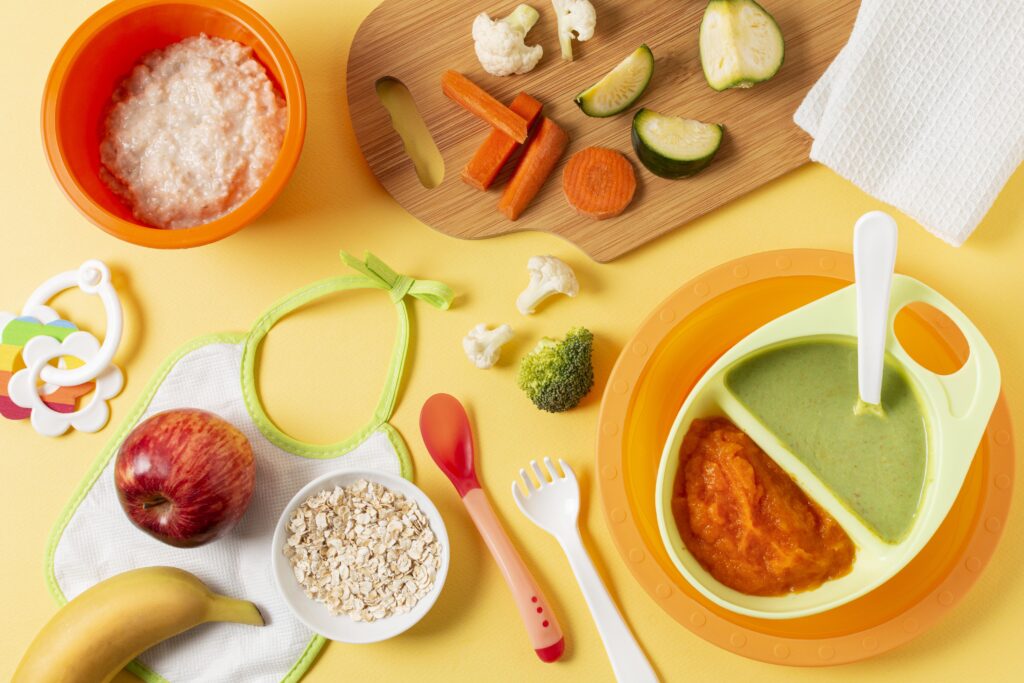
Best First Foods:
Start with single-ingredient, iron-rich foods. Introduce new foods one at a time and wait 3–5 days before introducing another to monitor for allergies.
- Iron-Fortified Baby Cereal: Rice or oatmeal cereal mixed with breast milk or formula.
- Pureed Vegetables: Carrot, pumpkin, sweet potato.
- Mashed Fruits: Banana, avocado, pear, apple.
- Protein Sources: Pureed lentils, tofu, chicken (around 7–8 months).
- Egg Yolk: Introduced after 6–7 months.
Avoid adding salt, sugar, honey, or cow’s milk during the first year.
5. Building a Feeding Routine (6–12 Months)
Between 6 to 12 months, feeding becomes more structured. Babies still receive most calories from breast milk or formula, but solid foods become a vital part of their diet.
Feeding Frequency:
- 6–8 months: 2–3 solid meals + 4–6 breast/formula feeds per day.
- 9–12 months: 3 solid meals + 1–2 snacks + 3–4 milk feeds per day.
Encourage self-feeding with soft finger foods to develop motor skills and independence.
Foods to Include:
- Fruits and vegetables: Steamed, mashed, or soft.
- Whole grains: Small portions of pasta, bread, or rice.
- Dairy: Yogurt and cheese in small amounts (no cow’s milk as primary drink yet).
- Proteins: Eggs, beans, poultry, fish (boneless).
6. Foods to Avoid in the First Year
Some foods are unsuitable or unsafe for babies under 12 months due to allergy risks, choking hazards, or digestion issues.
Unsafe Foods:
- Honey: Can cause infant botulism.
- Cow’s Milk: Not a suitable replacement for breast/formula under 12 months.
- Whole Nuts & Popcorn: Choking hazard.
- Raw or Undercooked Eggs/Fish: Risk of infection.
- Salty or Sugary Foods: Strain on immature kidneys and unnecessary calories.
- Fruit Juice: High in sugar, risk of tooth decay and digestive issues.
7. Allergies and Intolerances
Introducing allergenic foods early (after 6 months) may reduce the risk of food allergies. Common allergens include:
- Peanuts
- Eggs
- Dairy
- Wheat
- Soy
- Fish
Start with small amounts and observe for signs of allergy: rash, vomiting, diarrhea, or breathing difficulty. Seek medical help immediately if any reaction occurs.
8. Hydration and Fluids
0–6 Months:
- No additional water needed; breast milk or formula provides all hydration.
6–12 Months:
- Small amounts of boiled and cooled water can be offered in a cup.
- Avoid sugary drinks, soda, or tea.
9. Responsive Feeding and Cues
Responsive feeding means recognizing and responding appropriately to a baby’s hunger and fullness cues. It builds trust and helps prevent overeating or underfeeding.
Hunger Signs:
- Sucking hands
- Lip smacking
- Turning head toward breast or bottle
- Crying (late sign)
Fullness Signs:
- Turning head away
- Closing mouth
- Pushing food away
- Becoming distracted
10. Cultural Practices and Homemade Baby Food
Many cultures use traditional foods and practices for infant feeding. Homemade baby food is encouraged for its freshness and customizability.
Tips for Making Homemade Baby Food:
- Use fresh, clean, and cooked ingredients.
- Blend or mash to appropriate consistency.
- Store in sterilized containers; refrigerate or freeze portions.
- Avoid salt, sugar, and artificial additives.
Popular traditional foods include:
- Indian khichdi (rice and lentils)
- African maize porridge
- Asian congee (rice soup)
11. Monitoring Growth and Nutrition
Pediatric check-ups include tracking weight, height, and head circumference. Growth charts help ensure the baby is developing appropriately.
Parents should consult doctors or nutritionists if:
- The baby isn’t gaining weight
- Has frequent digestive issues
- Refuses food consistently
- Shows signs of nutritional deficiency (e.g., pale skin, lethargy)
12. Conclusion
Feeding a newborn is a critical responsibility that impacts not just physical growth but also cognitive and emotional development. Whether you choose to breastfeed, formula feed, or a combination of both, what matters most is ensuring the baby is nourished, loved, and thriving. As the baby grows, introducing solids becomes a joyful milestone that opens a world of tastes and textures.
Patience, observation, and responsiveness are key to understanding your baby’s needs. Consult your pediatrician regularly, follow safe feeding practices, and enjoy the journey of nourishing your child during this magical first year.
Would you like this article formatted for blog or print? I can also provide citations or create a downloadable PDF if needed.